21 May - World Day for Cultural Diversity for Dialogue and Development
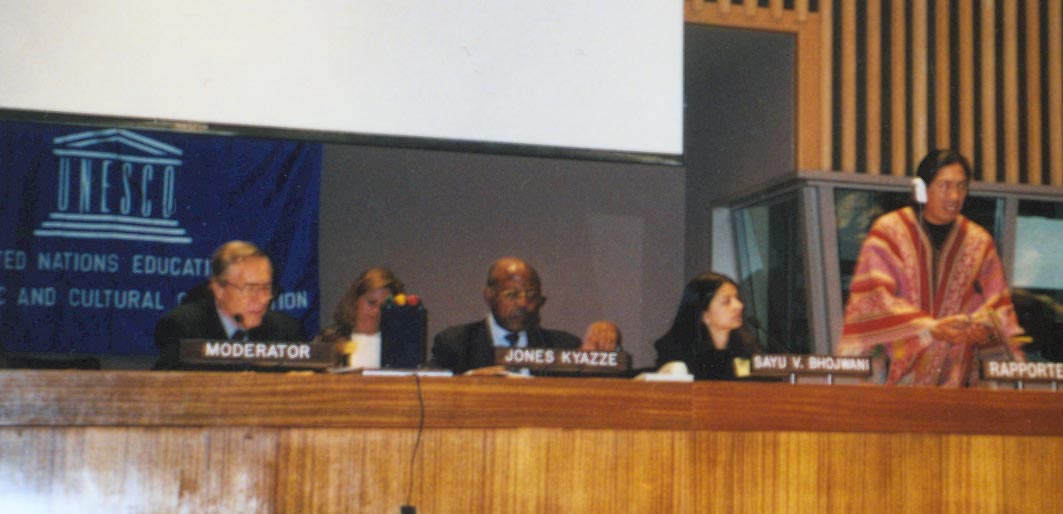
First World Day for Cultural Diversity for Dialogue and Development 21 May 2003 at United Nations Hqrs in New York City
Sponsored by UNESCO in collaboration with Yachay Wasi
Report by Marie-Danielle Samuel, Yachay Wasi:
In October 2002, the Permanent Mission of Venezuela to the United Nations, on behalf of the Group of 77 and China, introduced the resolution A/C.2/57/L.13 to the Second Committee. The General Assembly in December 2002 adopted this resolution proclaiming May 21 as the “World Day for Cultural Diversity for Dialogue and Development”. Final Document is A/RES/57/249
UNESCO sponsored the first commemoration of this Day on 21 May 2003 at UN Hqrs, in collaboration with Yachay Wasi, as a side event to the Second Session of the United Nations Permanent Forum on Indigenous Issues (12-23 May 2003), which is an advisory body to the Economic and Social Council (ECOSOC) with a mandate to discuss Indigenous Issues related to inter alia culture and development.
Background of Yachay Wasi’s involvement - In May 2002 and on behalf of the NGO Committee on the International Decade of the World’s Indigenous Peoples, Yachay Wasi organized a Panel Discussion at NY University, during the first Session of the Permanent Forum on Indigenous Issues and during the International year of Cultural Heritage, entitled: “Cultural Heritage and Sacred Sites: World Heritage from an Indigenous perspective”. Speakers included Dr. Jones Kyazze, UNESCO Rep. to United Nations, Dr. Sarah Titchen, UNESCO World Heritage Centre, representatives from OHCHR, Secretariat on Biological Diversity and Indigenous Nations, including Mr. Luis Delgado Hurtado, President of Yachay Wasi.
This, and previous collaborations with UNESCO since 1992, prompted Yachay Wasi to apply for official partnership with UNESCO. This was done in December 2002. Marie-Danielle Samuel, Yachay Wasi Vice President and Main Rep. to UN, subsequently mentioned by phone to a UNESCO Officer in Paris that, contrary to her desire to do a follow-up on the Sacred Sites panel, it seemed that she would not be able to do anything during this Second Session of the PFII. He then asked her to think about preparing an event with UNESCO for the May 21 first Commemoration of the World Day for Cultural Diversity for Dialogue and Development as a side event to the Second session of the Permanent Forum on Indigenous Issues. Before traveling to Paris as Observer to the Extraordinary Session of the World Heritage Committee in March 2003, Marie-Danielle Samuel approached Susan Byng-Clarke, Public Information officer in UNESCO NY Office, for the possibility of organizing this event. With Ms. Byng-Clarke’s positive consideration of working on this, Ms. Samuel was able to obtain UNESCO funding which was wired from Paris to UNESCO NY Office on April 4, 2003. She was then able to confirm the project with the Secretariat of the Permanent Forum on Indigenous Issues who had reacted positively to the proposal. The Mayor’s office of the City of New York was contacted as this Day will be celebrated annually and to, hopefully make the month of May, in this “capital of the world”, synonym with international and traditional cultural diversity.
Highlights
A symbolic* 4 minutes DVD entitled “Machu Picchu, the Sacred City of the Inkas”, featuring photographs by Luis Delgado Hurtado, was shown.
It was indeed gratifying to hear the name of Yachay Wasi referred to several times by Dr. Jones Kyazze, UNESCO Representative to the UN, in his introduction to the program and in his featured speech, including his unexpected mention of the name of Marie-Danielle Samuel, Yachay Wasi, as co-organizer of the event with Susan Byng-Clarke, UNESCO; Luis Delgado Hurtado, President of Yachay Wasi’s greeting in Quechua, the haunting music by Wayno and the sights of Machu Picchu shown in this UN Conference room expressed for the members of Yachay Wasi a timely spiritual significance.
The speakers in panel were well chosen to convey the purpose of this Day.
Mr. Kevin Sanders, moderator, commented on a planetary citizenship celebrated as a mosaic of cultures and introduced H.E. Gert Rosenthal (Guatemala), President of ECOSOC, who mentioned the second session of the Permanent Forum on Indigenous Issues and expressed his respect for cultural diversity. He referred to the excellent work of the World Commission on Culture and Development with its President Javier de Cuellar and having as a member Ole Henrik Magga, who is the current Chair of the Permanent Forum on Indigenous Issues.
Dr. Jones Kyazze, UNESCO representative to UN, stated that since 1945 UNESCO has emphasized the importance of culture. Over the years, with the help of the United Nations, UNESCO has established culture as a key aspect of the life, actions and well being of the human race. He touched upon all the declarations and conventions, days, years and decades UNESCO has originated. He quoted from an appeal from the Director-General of UNESCO to Member States to commemorate the 21st of May as an excellent means to raise public awareness over the values of cultural diversity and promoting the art of living together. He quoted an appeal also to involve decision makers, but also and in particular Indigenous communities, …artists, associations and the media. “By associating Yachay Wasi people and Discovery Channel to today’s event, that is actually what I am trying to do this afternoon.” (Quote)
Ms. Njuma Ekundanayo, Democratic Republic of Congo, Vice Chair of the Permanent Forum on Indigenous Issues, wished a happy Day to all members of the Human family. She stated that since the creation of modern countries, Indigenous peoples and their culture have always been marginalized and unknown. Some lost their lands, their sacred sites…She gave appreciation to the United Nations for their work on behalf of Indigenous Peoples but gave a warning that Cultural Diversity be utilized objectively by UNESCO toward a sustainable development with Indigenous participation.
Ms. Sayu Bhojwani, New York City Commissioner for Immigrant Affairs, spoke of the diversity of immigrants in the capital of the world.
”Endangered languages”, a co-production of UNESCO, UN Works and Discovery Channel, was screened.
-------
